April 13, 2026 /

Vagus nerve stimulation involves using a device to send electrical impulses to the vagus nerve. The vagus nerve is the main nerve of the system that controls digestion, heart rate and other vital functions. When the device fires, it sends electrical impulses to areas of the brain. This changes brain activity to treat certain conditions.
Devices for vagus nerve stimulation include one the Food and Drug Administration (FDA) approved that goes into the body, to treat epilepsy and depression. It works by sending impulses to areas of the brain that cause seizures and affect mood.
The FDA has approved another vagus nerve stimulation device for use after a stroke. For people who have trouble using their hand or arm after a stroke, the device helps make new pathways in the brain during exercise. This can help people regain the use of the affected hand or arm.
Surgeons put these devices under the skin in the chest. A wire threaded under the skin connects the device to the left vagus nerve. The device sends electrical signals along the left vagus nerve to the brainstem to affect the brain.
There’s also a vagus nerve on the right side of the body. Surgeons don’t often use the right vagus nerve because it’s more likely to affect how the heart works.
There are newer vagus nerve stimulation devices that don’t need surgery to implant the device. The FDA has approved one such device in the United States to treat cluster headaches and migraine. This device works by holding it against the skin of the neck. The device blocks pain signals to prevent or relieve head pain.
Researchers study ways to use vagus nerve stimulation to treat other conditions, as well. Research is looking at using the therapy for rheumatoid arthritis, inflammatory bowel disease, bipolar disorder, obesity and Alzheimer’s disease.
Products & Services
Show more products from Mayo Clinic
Why it’s done
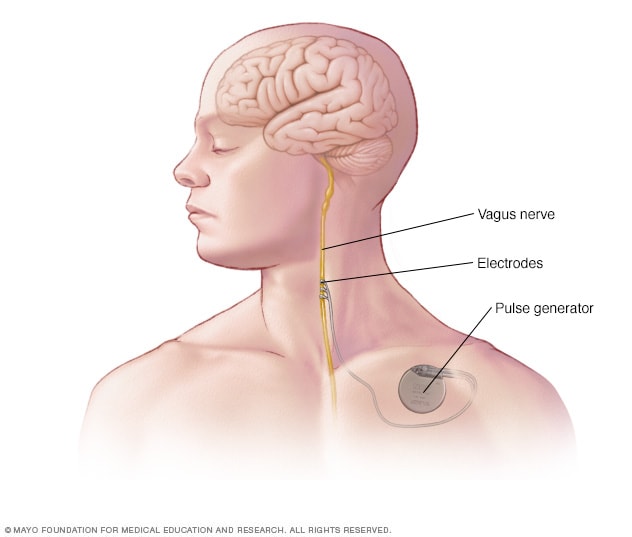 Implanted vagus nerve stimulationEnlarge image
Implantable vagus nerve stimulation devices can treat a number of conditions.
Epilepsy
Anti-seizure medicines don’t fully manage seizures for about one-third of people with epilepsy. For some of them, vagus nerve stimulation may help manage their seizures.
The FDA has approved vagus nerve stimulation for people with epilepsy who:
- Are 4 years old and older.
- Have focal epilepsy. In focal epilepsy, one area of the brain causes the seizures.
- Can’t fully manage their seizures with medicines.
Healthcare professionals also may use vagus nerve stimulation for people with generalized epilepsy.
Depression
Vagus nerve stimulation may help people with depression. It may be used when medicines, psychological counseling and electroconvulsive therapy haven’t worked well.
The FDA has approved vagus nerve stimulation for the treatment of depression in adults who:
- Have long-lasting, hard-to-treat depression, known as treatment-resistant depression.
- Haven’t improved after trying four or more medicines, electroconvulsive therapy or both.
- Keep using their other depression treatments with vagus nerve stimulation.
CONTINUE READING important information on this topic, from The MAYO Clinic
Stay informed with MS news and information - Sign-up here
For MS patients, caregivers or clinicians, Care to chat about MS? Join Our online COMMUNITY CHAT